
Veiligheidsregio Rotterdam-Rijnmond
No Focus on How but on What
The Veiligheidsregio Rotterdam-Rijnmond stands for “together strong” in risk management, incident response, and crisis management through joint efforts of services, organizations, citizens, and businesses, preventing or limiting damage and suffering in incidents.
The VRR has the following objectives:
Risk and crisis management: Fulfilling regional tasks with regard to safeguarding the physical safety of society (risk management), preparation for disaster response and crisis management, and returning to a normal situation after a crisis (recovery). Multidisciplinary collaboration is essential in this, with a special role reserved for the joint dispatch center as an integrated information hub.
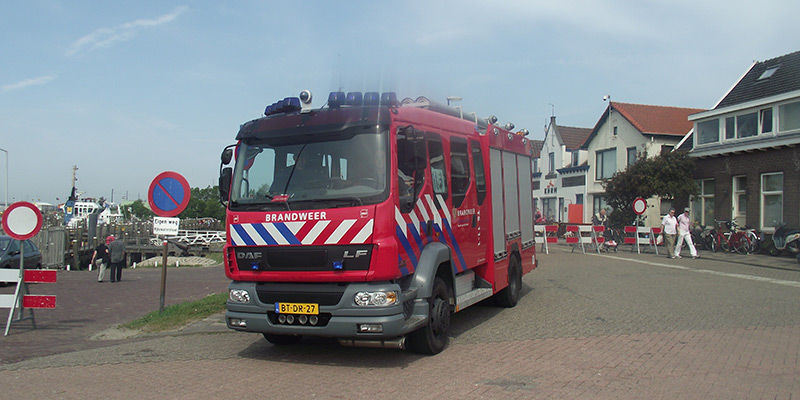
Fire service: Efficiently organizing and coordinating work to prevent, limit, and combat fire, preventing and limiting accidents in case of fire, and everything related to it.
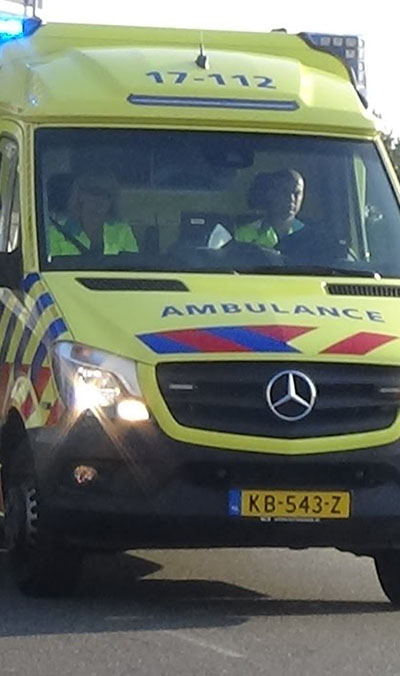
Ambulance care: Efficiently organizing, coordinating, and executing the transport of patients and victims as a result of an accident, registering these processes, and promoting adequate admission of patients and victims to hospitals or other institutions for institutional care.
GHOR: Preparing and achieving efficiently organized and coordinated medical assistance in accidents and disasters.
Risk & Crisis Management (R&C)
Risk and Crisis Management is responsible for multidisciplinary preparation for disaster and crisis situations within the Rotterdam-Rijnmond region. R&C is, as it were, an organizational umbrella over the risk and crisis management activities of the fire service, police, Regional Medical Emergency Services (GHOR), the port authority, the environmental service DCMR, and municipal services. The Rotterdam-Rijnmond region is an area with many different risks. Besides disasters in the chemical industry, shipping and transport accidents, the region is also vulnerable to other types of crises, such as flooding or failure of utilities. Rotterdam-Rijnmond is a densely populated region and moreover the economic engine of the Netherlands. A major calamity or prolonged disruption of utilities such as electricity can therefore have major consequences, both within and outside the region. The risk of a terrorist attack also receives attention within R&C. It ensures that all operational partner organizations in the safety region are well prepared for all foreseeable crisis situations.
Collaboration
Diana Brouwer is head of audit and control and is ultimately responsible for this department of VRR. Yvon Bronkhorst coordinates the quality and audit policy area VRR-wide, and Bas de Vaan, senior policy officer, strengthens her team. Two auditors are also active. They have an advisory role and work closely with the quality officers of the various organizational units. They also provide insight into the coherence of the organization. Diana, Yvon, and Bas are actively involved in various projects where quality aspects regarding processes are addressed.
VRR is a relatively young organization that was established in 2006. It consists of R&C (Risk and Crisis Management), Fire Service, Dispatch Center, Ambulance, and GHOR. They are different organizational units that work closely together. It’s a challenge and a must to make the different organizations collaborate in a uniform way. To improve communication and collaboration in the chain, Process Management and Results-Oriented Working were chosen.
Information silos
Before the purchase of Comm’ant, there was insufficient uniformity in recording, managing, and monitoring process and procedure descriptions. Managing procedures in Microsoft Visio and work instructions in Microsoft Word was laborious and error-prone. It was difficult to create connections with different business units and get an integrated overview of the processes. Therefore, a VRR process model was developed and the relationship with VRR products was described.
No focus on HOW but on WHAT
There are many packages based on procedure descriptions rather than process descriptions. These types of systems primarily show HOW actions should be done, comparable to a work instruction. They don’t look at what an employee needs and WHAT they exactly deliver. However, these inputs and outputs of the business process are very important. One employee’s output is again the input for the next employee, and this continues until successful collaboration in the chain and the desired end result is achieved.
Connection and steering on results
A need arose for a common language for VRR.
Yvon: “Connection is important to us, to visualize coherence, identify bottlenecks, and also link products. We are charmed by the SqEME methodology and Comm’ant supports this methodology.” Bas: “Through the use of Comm’ant, SqEME has naturally crept in and we experience the benefits of this every day. Gradually, we want to be able to steer increasingly on the process and the result. Comm’ant helps us to think and work in a results-oriented manner.”
Diana: “We want to be able to provide support to the organization, which is making a transition from activity-oriented to results-oriented working. A cultural shift takes time and must take place step by step.”
The right choice
To achieve the mentioned goals regarding process-oriented thinking and working and quality management, the VRR team went looking for a solution. After a careful selection process, various packages were compared and Comm’ant was chosen.
In addition to many technical requirements, the package had to be very user-friendly and automatically consistent. It also had to have a powerful search function, because finding relevant information quickly is essential.
Communication, discussion, and feedback about processes naturally also play an important role.
Bas: “Quality officers had different ways of describing processes before the purchase of Comm’ant, sometimes without process diagrams (flows) and much text. There is now more unity in thinking and a common language has emerged. Through Comm’ant, there is a basis to talk about processes and work agreements. With Comm’ant and SqEME, the focus is on handover moments, and that fits exactly with our desired way of working, namely results-oriented… In Comm’ant, much information can be found at the handover moments, tasks, responsibilities and authorities, standards and requirements, risk & control. This is highly valued by users. Miscommunication almost always arises during handover moments between teams and departments. Making agreements that can be recorded in Comm’ant helps to improve this.”
Implementation
The software was quickly installed and a plan of approach was made in collaboration with Comm’ant. Meanwhile, many employees are building and they experience the ease of use when building with Comm’ant. It was chosen to approach it step by step, although it doesn’t always go entirely according to plan. However, it hasn’t caused problems. During implementation, it’s important to manage expectations and keep employees enthusiastic. Every change or new system needs explanation.
Yvon: “The results-oriented model is very logical. Once you understand it, you become, as it were, infected with it. You do have to organize the infection of the rest of the organization well! There is now overview through the VRR process model and that helps enormously.”
User-friendly and automatically consistent
In Comm’ant, all connections are visible as well as the coherence and interfaces of all aspects of business operations. This improves mutual collaboration. Manageability is also much better with Comm’ant—there are no information silos but an integrated management system in which many people can build simultaneously. Automatic consistency is important to us; otherwise management and maintenance cost too much time.
Yvon: “It’s pleasant that management aspects can be linked to processes. We experience Comm’ant as user-friendly and being able to search the content of documents is very valuable for readers.”
Service from Comm’ant? “We haven’t had any problems yet. If there are questions, there is a quick and professional response.”